 Orleans: (613) 830-3300
 Mon-Sat 9:00am – 6:00pm


Dental Bone Grafting In Ottawa
Building the Foundation for a Stronger Smile
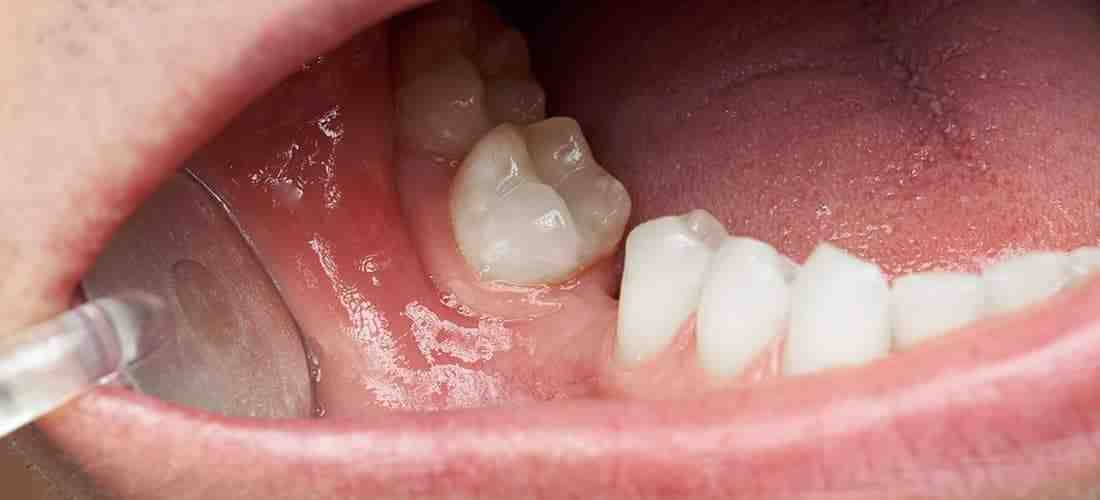
When a tooth is lost or extracted, the jawbone beneath it no longer receives the stimulation it needs to stay strong. Without that pressure, the body gradually reabsorbs the bone, causing it to shrink and weaken over time. Bone grafting restores lost jawbone volume, creates a solid foundation for dental implants, and protects the long-term health of your jaw and surrounding teeth. At Inova Dental, we perform bone grafting in Ottawa as a minimally invasive in-office procedure at both of our locations.
What Is Dental Bone Grafting?
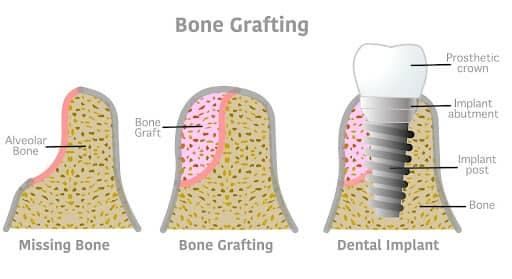
Dental bone grafting is a surgical procedure that regenerates and replaces lost or deteriorated jawbone. Graft material is placed at the site of bone loss, where it acts as a scaffold that stimulates and guides the body to grow new bone in its place. Over time the graft material is gradually replaced by the patient’s own natural bone, restoring the jaw to a level of density and volume that can support dental implants, dentures, and other restorations.
Bone grafting can also restore the right facial contour in cases where significant bone loss has altered the shape of the jaw, and it prevents the further deterioration that leads to shifting teeth, bite problems, and ongoing oral health issues.
Why Does Jawbone Density Matter for Dental Implants?
A dental implant is a titanium post that is screwed into the jawbone and used as an anchor to hold an artificial tooth crown. For an implant to be successful, the metal post must become fully osseointegrated, meaning it fuses completely with the surrounding bone and becomes stable enough to function as an artificial tooth root.
For this to happen, there must be sufficient bone around the implant in all dimensions: width, height, and depth. Generally, a minimum of 1mm of bone is required around a dental implant on all sides. If the implant is adjacent to another implant, even more space is required. When there is not enough healthy bone structure to provide this stability, a bone graft is needed before the implant can be placed.
Why Does Jawbone Loss Occur?
The most common causes of jawbone loss include:
- Tooth loss or extraction: Once a tooth is removed, the bone that supported its root begins to shrink almost immediately. The most significant losses occur in the first six months.
- Gum disease: Advanced periodontal disease causes infection that destroys the bone surrounding the teeth. If left untreated, this bone loss can become severe.
- Dental trauma or injury: A blow to the jaw can damage or destroy bone tissue directly.
- Infection: Deep dental infections, abscesses, and cysts can erode surrounding bone over time.
- Denture wear: Long-term denture use without implant support does not stimulate the jawbone, causing gradual resorption beneath the denture.
When Would You Need a Bone Graft?
Bone grafting may be recommended if you need to:
- Prepare the jawbone for a dental implant where insufficient bone exists
- Preserve the socket immediately after a tooth extraction to prevent bone loss
- Restore bone lost to gum disease or infection
- Rebuild the jaw in preparation for dentures
- Repair bone damaged by dental trauma
- Stabilise loose teeth by restoring the supporting bone
- Restore facial bone structure and contour after significant bone loss
Types of Bone Grafting Procedures
The type of bone graft required depends on the condition of your jawbone, the extent of bone loss, and the restoration being planned.
Minor Bone Grafting
Minor bone grafting is the most common type and is performed as an in-office procedure under local anesthetic. It covers the majority of cases where a patient needs a graft in preparation for a dental implant or to preserve bone after an extraction. There are three main minor bone graft procedures:
Socket Graft (Ridge Preservation Graft)
After a tooth is extracted or lost, the body quickly begins to dissolve the surrounding jawbone. A socket graft, also known as a ridge preservation graft, is placed directly into the empty socket immediately after extraction to prevent this bone loss. If a dental implant is placed immediately after extraction, a socket graft may not be needed. However, in cases where there is a size variance or infection present, a socket graft is placed instead. After three to six months of healing, the site is ready for implant placement.
Block Bone Graft
If a tooth extraction was not immediately treated with a socket graft, more significant bone loss can occur. Trauma, injury, or severe gum disease can also cause this level of deterioration. In these cases, a block bone graft is used to reconstruct the jawbone. This procedure uses either a piece of bone taken from the back of the lower jaw or the chin, or more commonly a cadaver or donor block bone graft. Once the graft fuses with the existing bone over a few months, the implant process can continue.
Sinus Lift Procedure
Placing an implant in the upper jaw is often complicated by the proximity of the sinus cavity. In this area of the mouth, there is very little bone between the jaw and the maxillary sinus. A sinus lift shifts the sinus slightly upward so that bone tissue can be placed in the space directly above the jaw, creating the height needed to support an implant. In some cases the implant can be placed immediately after the sinus lift if the natural bone is adequate. If the natural bone is thin, a few months of healing are required before the implant can be placed.
Major Bone Grafting
Major bone grafting is required for individuals with significant jaw defects due to trauma, injury, tumour removal, or congenital conditions. This procedure involves extracting bone from elsewhere in the body, such as the hips, legs, or skull, and transplanting it into the jaw. Major bone grafting is performed under general anesthesia and requires a hospital stay. It is significantly less common than minor grafting and is reserved for complex reconstructive cases.
Types of Bone Graft Material
Regardless of the procedure type, the graft itself can be made from one of four materials:
Autograft
Bone taken from your own body, typically from the jaw, chin, or hip. The most biologically active option with the highest success rate. Requires a second surgical site for harvesting, which increases recovery time and cost.
Allograft
Human bone sourced from a licensed and rigorously screened donor tissue bank. One of the most commonly used materials today. Integrates well with natural bone, avoids a second surgical site, and carries minimal risk due to thorough processing and sterilisation.
Xenograft
Bone sourced from an animal, most commonly bovine. Specially processed and sterilised for safety. Acts as an effective scaffold for new bone growth and is available in larger quantities for more significant deficiencies. Takes longer to integrate than autografts or allografts.
Alloplast
Synthetic bone substitute materials such as calcium phosphate or bioactive glass. No donor bone required, so there is no risk of disease transmission or immune response. Designed to stimulate natural bone growth and be gradually replaced by the patient’s own bone.
Your dentist will recommend the most appropriate material based on your specific situation at your consultation.
The Bone Grafting Process at Inova Dental
Consultation and Imaging
We begin with a thorough examination including X-rays or a CT scan to assess the extent of bone loss, the dimensions of available bone, and the appropriate type and volume of graft material needed. We will explain your options honestly and walk you through the full treatment plan before anything begins.
Preparation and Anesthetic
Minor bone grafting is performed in our Ottawa dental office under local anesthetic, making the procedure virtually painless. Sedation options are available for patients with dental anxiety. The treatment area is fully numbed before the procedure begins.
Graft Placement
The graft material is carefully placed at the site of bone deficiency. The area is thoroughly cleaned and the graft is secured in position. In some cases a protective membrane is placed over the graft to support bone regeneration. The site is then sutured closed.
Healing and Integration
The grafted area heals over several months while the body gradually replaces the graft material with new natural bone. Socket grafts and smaller procedures typically require three to six months. Block bone grafts and sinus lifts may require up to nine to twelve months before an implant can be placed. Follow-up appointments allow us to monitor healing throughout.
Implant Placement
Once adequate healing and osseointegration have occurred and imaging confirms the bone is ready, the titanium implant post is placed into the grafted jawbone. After a further healing period, the abutment and crown are attached to complete the restoration.
Caring for Your Jaw After Bone Grafting
Home care after bone grafting is one of the most important factors in a successful outcome:
- Take prescribed antibiotics and any other medications as directed to prevent infection
- Take over-the-counter pain relief such as ibuprofen or acetaminophen as needed for discomfort
- Apply an ice pack for 15 to 20 minutes at a time to manage swelling in the first few days
- Avoid rinsing vigorously for the first 24 hours after the procedure
- Rinse gently with warm saltwater after the first day to keep the area clean
- Stick to soft foods during the initial healing period and avoid chewing near the graft site
- Avoid smoking and alcohol throughout the healing period as both significantly impair bone regeneration and increase the risk of graft failure
- Avoid strenuous physical activity for the first few days
- Attend all follow-up appointments so we can monitor healing and confirm the graft is integrating properly
How Much Does Bone Grafting Cost in Ottawa?
The cost of dental bone grafting varies depending on the type of procedure, the graft material used, and the complexity of the case:
- Socket grafts and small minor grafts: $300 to $800 per site
- Block bone grafts and larger augmentations: $1,500 to $3,000 per site
- Sinus lift procedures: $2,000 to $3,000 per site
- Major bone grafting involving a hospital stay and general anesthesia is significantly higher and quoted on a case by case basis
Autografts involving harvesting bone from your own body are more expensive due to the added complexity of a second surgical site. Allografts and xenografts are generally more affordable.
Bone grafting performed in preparation for a dental implant may be partially covered by dental insurance as a surgical procedure. Coverage varies significantly by plan. Bone grafting is not covered under the Canadian Dental Care Plan (CDCP) in most cases. We offer direct billing to most major insurance providers and are happy to review your coverage at your consultation.
Why Choose Inova Dental for Bone Grafting in Ottawa?
- Minimally Invasive: Minor bone grafting is performed in our dental office under local anesthetic with no hospital stay required.
- Safe Materials: All donor graft materials undergo rigorous screening and processing, making them safe with minimal risk.
- Full Range of Options: We offer all four types of graft material and will recommend the most appropriate one for your specific situation.
- Implant Expertise: Our team understands the precise bone dimensions required for successful implant osseointegration and plans every graft accordingly.
- Honest Consultations: We will tell you exactly what to expect from the procedure, the healing timeline, and the total cost before treatment begins.
- Multilingual Team: Our staff speaks English, French, and Arabic, so nothing gets lost in translation.
- Two Convenient Ottawa Locations: Visit us on Innes Road or Bank Street, Monday through Saturday.
Bone Grafting FAQs
Does bone grafting hurt?
Minor bone grafting is performed under local anesthetic so you should feel little to no discomfort during the appointment. Sedation options are available for patients with dental anxiety. Some mild soreness and swelling is normal in the days following the procedure and can be managed with over-the-counter pain relief and a cold compress. Most patients find the recovery more manageable than they expected.
How long does bone grafting take to heal?
Healing time depends on the size and type of graft. Socket grafts and smaller procedures typically require three to six months before an implant can be placed. Block bone grafts and sinus lifts may require up to nine to twelve months. Your dentist will confirm healing progress at your follow-up appointments using imaging before proceeding to implant placement.
Is bone grafting safe?
Yes. Minor bone grafting is a routine dental procedure. Autografts carry little to no risk as the material comes from your own body. Donor materials, whether human or animal, undergo rigorous screening and sterilisation before use, making them safe with minimal risk of complications.
Do I need a bone graft before a dental implant?
Not always. Whether a bone graft is needed depends on the density and volume of your existing jawbone. If sufficient bone exists in all dimensions, width, height, and depth, an implant can be placed directly. If bone loss has occurred, a graft is required first. We assess bone dimensions at your implant consultation using X-rays or a CT scan.
What is osseointegration?
Osseointegration is the process by which a dental implant fuses with the surrounding jawbone. For an implant to be successful, the titanium post must become fully integrated and stable within the bone so it can function as an artificial tooth root. This is why adequate bone volume and density are so important before implant placement.
What is the difference between a socket graft and a block bone graft?
A socket graft, also called a ridge preservation graft, is placed immediately after tooth extraction to prevent bone loss at the socket. It is the simplest and most common type of minor graft. A block bone graft is used when more significant bone loss has already occurred and a larger volume of bone needs to be rebuilt before an implant can be placed.
What is a sinus lift?
A sinus lift is a specific type of bone graft performed in the upper jaw where there is insufficient vertical bone height due to the proximity of the maxillary sinus. The procedure shifts the sinus slightly upward to create space for bone graft material to be placed directly above the jaw. Once healed, this creates enough height to support a dental implant in that area.
Can I smoke after a bone graft?
No. Smoking significantly impairs bone regeneration and increases the risk of graft failure and infection. We strongly advise patients to avoid smoking throughout the entire healing period. This is one of the most important steps you can take to protect the outcome of your graft.
Is bone grafting covered by insurance?
Coverage varies by plan. Bone grafting performed in preparation for a dental implant may be partially covered under surgical or major restorative benefits. It is not covered under the Canadian Dental Care Plan (CDCP) in most cases. We recommend checking your specific plan before treatment and our team will help you understand and maximise your benefits.
Ready to Rebuild Your Jaw?
Whether you are preparing for a dental implant or dealing with bone loss from gum disease or tooth extraction, our team at Inova Dental is here to help. We are welcoming new patients at both of our Ottawa locations.
Looks like you’ve found your dental home. We look forward to seeing you soon!
Schedule My Visit