 Orleans: (613) 830-3300
 Mon-Sat 9:00am – 6:00pm


Frenectomy In Ottawa
A Small Procedure That Makes a Big Difference
A tight or oversized frenum is a surprisingly common issue that can interfere with feeding in infants, speech development in children, and oral health and comfort in adults. A frenectomy is a quick, minimally invasive procedure that releases the restricted tissue and restores normal function. At Inova Dental, we perform laser frenectomies in Ottawa for patients of all ages at both of our locations.
What Is a Frenum?
The mouth contains a total of seven frenal attachments, which are small folds of soft tissue that connect different structures in the mouth. Two of these are most commonly associated with oral function problems:
- The lingual frenum: The tissue that connects the underside of the tongue to the floor of the mouth. When this tissue is too short or tight, it restricts tongue movement, a condition known as ankyloglossia or tongue tie.
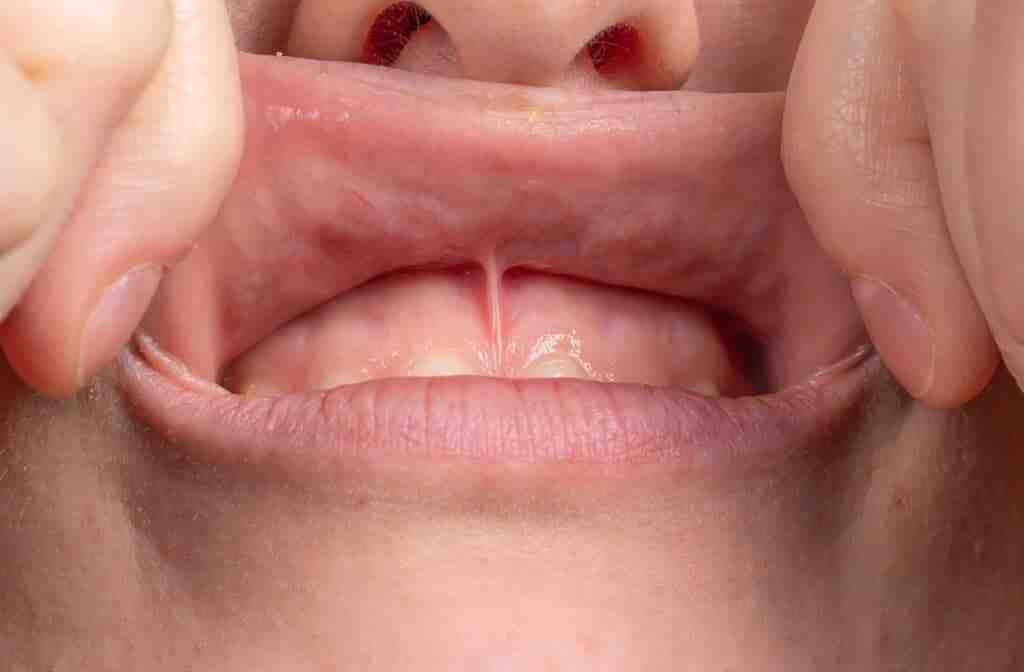
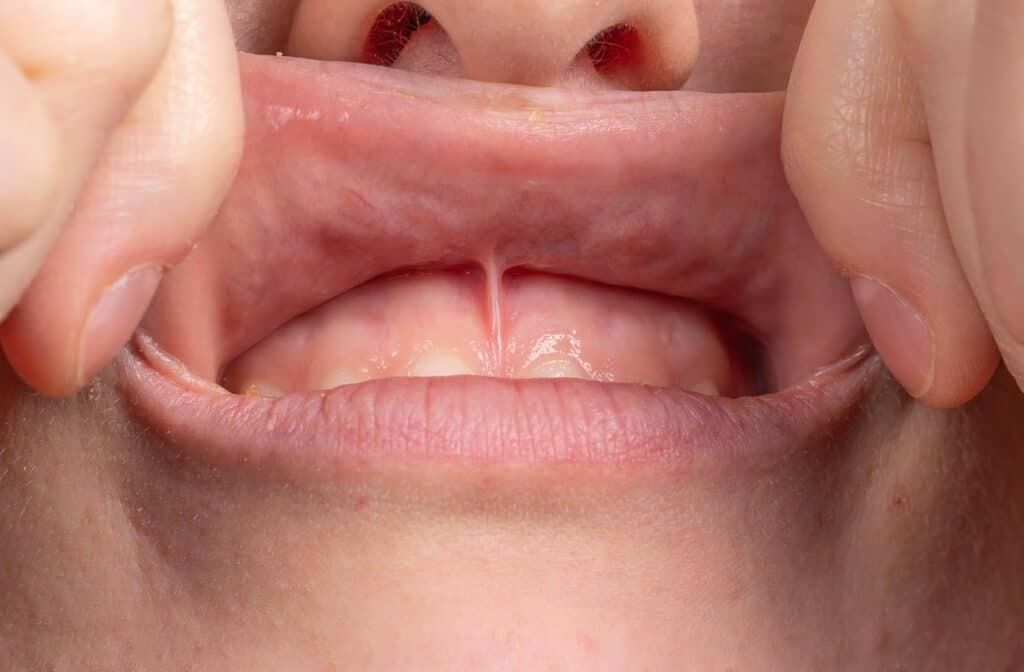
- The maxillary labial frenum: The tissue that connects the inside of the upper lip to the gums just above the upper two front teeth. When this tissue is too large or positioned too low, it can restrict lip movement and cause a gap between the front teeth. This is known as a lip tie.
A frenectomy, also called a frenulectomy or frenotomy, is a procedure that removes or modifies these tissues to restore normal function.
Understanding the Maxillary Labial Frenum
You can feel your maxillary labial frenum by running your tongue up between your upper lip and your teeth. You will feel a thin band of tissue connecting the lip to the gum just above the upper two front teeth.
When this frenum is too prominent, thick, or positioned too low, it can cause a visible gap between the upper front teeth known as a diastema. It can also restrict upper lip movement and contribute to gum recession at the attachment point.
However, it is important to know that immediate treatment is not always necessary. In many cases, when the permanent teeth come through they naturally close the gap on their own. If a gap remains after the permanent teeth have erupted, it can often be addressed with orthodontic treatment such as braces or Invisalign.
In cases where braces are used, the timing of the frenectomy matters. The frenectomy should not be performed before the gap is fully closed with orthodontics, as scar tissue forming during healing can make it harder to eliminate the space. Once the gap is closed, a frenectomy can prevent the teeth from drifting apart again after braces are removed. Your dentist will advise on the correct timing for your specific situation.
Understanding the Lingual Frenum
The lingual frenum connects the tongue to the floor of the mouth. In some cases, this frenum extends too far toward the tip of the tongue, restricting its range of motion. This is what is commonly referred to as being tongue tied.
It is worth noting that a prominent lingual frenum does not always cause significant problems. Many children are able to eat and speak normally even with the condition. Issues are most likely to arise when the frenum runs all the way to the tip of the tongue, as this level of restriction can interfere with breastfeeding in infants and lead to difficulties with speaking, swallowing, and chewing solid foods as the child develops.
When tongue tie is causing a functional problem, a lingual frenectomy is often the only treatment option to ensure the tongue can move and function normally.
What Problems Can a Restricted Frenum Cause?
Tongue Tie
- Difficulty breastfeeding in infants, affecting nutrition and weight gain
- Problems with bottle feeding
- Speech difficulties and impediments in children and adults
- Difficulty swallowing or eating certain foods
- Restricted tongue mobility affecting overall oral function
- Difficulty maintaining oral hygiene in hard-to-reach areas
Lip Tie
- Restricted upper lip movement
- A gap between the upper front teeth that may require orthodontic correction
- Gum recession at the attachment site
- Difficulty with lip closure
- Pain or discomfort in the lips and gums
- Interference with the fit of dentures in adults
If left untreated, an abnormal frenum can lead to worsening speech problems, alignment issues, gum recession, and more extensive dental treatment requirements over time.
Who Needs a Frenectomy?
Frenectomies are performed on patients of all ages:
- Infants struggling with breastfeeding or bottle feeding due to tongue tie or lip tie
- Children experiencing speech difficulties, eating problems, or gaps developing between the front teeth
- Teens undergoing orthodontic treatment where a labial frenum is contributing to a gap between the front teeth and may cause it to return after braces are removed
- Adults dealing with speech issues, gum recession, denture fit problems, or discomfort caused by a restrictive frenum
Why We Use Lasers for Frenectomies
Traditionally, frenectomies were performed using scissors or a scalpel to cut the frenum. While effective, this method involves more bleeding, a longer recovery, and greater post-procedure discomfort.
At Inova Dental, we use laser technology to perform all frenectomies. Here is why:
- Lasers cause minimal to no bleeding
- Minimal bleeding improves visualization during the procedure, increasing safety and precision
- The laser seals the tissue as it works, reducing the risk of infection and promoting faster healing
- Laser is particularly effective for posterior tongue ties that can be more difficult to access
- Laser removes all tissue from the ridge effectively in lip ties
- No general anesthesia or sedation required in most cases, particularly for infants and young children
- Recovery is significantly faster and more comfortable than with traditional methods
The procedure is safe, quick, and significantly more comfortable for patients of all ages compared to scissors or scalpel techniques.
The Frenectomy Process at Inova Dental
Consultation and Assessment
We begin with a thorough examination to assess the frenum and determine whether a frenectomy is the right course of treatment, whether the timing is appropriate, and which approach is best suited to your situation. For labial frenectomies in patients undergoing orthodontic treatment, we assess whether the procedure should be performed before or after the gap is closed. We discuss expected outcomes and answer all questions before proceeding.
Anesthetic
For older children and adults, local anesthetic is applied to numb the area completely before the procedure begins. For infants, the procedure is very brief and minimally uncomfortable, and general anesthesia is not required in most cases. Sedation options are available for patients with significant dental anxiety.
Laser Frenectomy
Using a precise laser, the restricted frenum tissue is gently released or removed. The laser seals the tissue as it works, minimising bleeding and improving visibility throughout the procedure. The frenectomy is completed in a single appointment and typically takes only a few minutes per site.
Recovery and Aftercare
Most patients experience only mild discomfort for a few days following the procedure. We provide full aftercare instructions including stretching exercises where appropriate to prevent the tissue from reattaching during healing. Infants can typically resume breastfeeding very shortly after the procedure.
Caring for the Treatment Site After a Frenectomy
Recovery from a laser frenectomy is generally quick and straightforward:
- Keep the area clean using gentle rinsing with warm saltwater after meals
- Perform any stretching exercises prescribed by your dentist to prevent tissue reattachment during healing
- Stick to soft foods for the first few days if tenderness is present
- Avoid touching or probing the treatment site with fingers or the tongue
- Take over-the-counter pain relief such as acetaminophen or ibuprofen as needed for mild discomfort
- Infants can breastfeed shortly after the procedure and typically show improvement quickly
- Contact us if you notice excessive swelling, worsening pain, or signs of infection
How Much Does a Frenectomy Cost in Ottawa?
In Ontario, frenectomies are priced in line with the Ontario Dental Association fee guide. Typical ranges are:
- Lingual frenectomy (tongue tie): $500 to $1,200
- Labial frenectomy (lip tie): $500 to $1,200
The final cost depends on the complexity of the procedure, the patient’s age, and whether sedation is required. Most straightforward cases fall within the lower end of this range.
Frenectomies performed for functional reasons, such as feeding difficulties in infants or speech impairment, may be covered partially or fully by dental or medical insurance. Coverage for cosmetic or orthodontic reasons is less consistent. Frenectomies are not covered under the Canadian Dental Care Plan (CDCP) in most cases. We recommend checking your specific plan and our team is happy to help you navigate your benefits.
Why Choose Inova Dental for Frenectomy in Ottawa?
- Laser Technology: We use laser frenectomy for minimal bleeding, improved precision, reduced discomfort, and faster recovery compared to traditional scissor or scalpel methods.
- All Ages Welcome: We perform frenectomies for infants, children, and adults with the same standard of gentle, attentive care.
- Single Visit: The procedure is completed in one appointment, typically in just a few minutes.
- Informed Guidance: We assess every patient individually and advise honestly on whether a frenectomy is needed, when the right time to perform it is, and what results to expect.
- Multilingual Team: Our staff speaks English, French, and Arabic, so nothing gets lost in translation.
- Two Convenient Ottawa Locations: Visit us on Innes Road or Bank Street, Monday through Saturday.
Frenectomy FAQs
Does a frenectomy hurt?
For older children and adults, local anesthetic is applied before the procedure so you should feel little to no discomfort during treatment. For infants, the procedure is very brief and general anesthesia is not required. Using laser technology significantly reduces post-procedure pain compared to traditional methods. Most patients experience only mild soreness for a few days afterward.
How long does a frenectomy take?
The procedure itself typically takes only a few minutes per site and is completed in a single appointment. Including preparation and aftercare instructions, most appointments are completed within 30 to 45 minutes.
How long is recovery after a frenectomy?
Recovery with laser frenectomy is fast. Infants typically show improvement very quickly and can resume breastfeeding shortly after the procedure. Older children and adults usually experience only mild discomfort for a few days. Full healing takes one to two weeks. Performing the prescribed stretching exercises during healing is important to prevent the tissue from reattaching.
My child has a gap between their front teeth. Do they need a frenectomy?
Not necessarily. In many cases, the gap will close naturally when the permanent teeth come through. If a gap remains after the permanent teeth have erupted, it can often be treated with orthodontics. A frenectomy is typically considered once orthodontic treatment is complete, as performing it before the gap is closed can lead to scar tissue that makes closing the space more difficult. We will assess your child's specific situation at your consultation and give you an honest recommendation.
Can my baby have a frenectomy?
Yes. Frenectomies are commonly and safely performed on infants, particularly for tongue tie or lip tie that is interfering with breastfeeding. Laser frenectomy is especially well suited to infants as it is quick, minimally uncomfortable, and does not require general anesthesia. We take extra care to ensure both infant and parent are comfortable throughout the appointment.
Will a frenectomy fix my child's speech?
A frenectomy can significantly improve tongue mobility and remove a physical restriction contributing to speech difficulties. The extent of improvement depends on the severity of the restriction and the patient's age. In older children and adults who have had a tongue tie for some time, speech therapy following the procedure may also be beneficial to retrain tongue movement patterns.
My child has a tongue tie but speaks and eats fine. Do they still need treatment?
Not always. A prominent lingual frenum does not always cause significant problems, and many children eat and speak normally with the condition. Treatment is recommended when the tongue tie is causing a functional issue such as feeding difficulty, speech impairment, or restricted tongue movement that affects daily life. We will assess the severity at your consultation and only recommend treatment if it is genuinely needed.
Is a frenectomy covered by insurance?
Coverage depends on the reason for the procedure and your specific plan. Frenectomies performed for functional reasons such as feeding or speech difficulties may be covered partially or fully under dental or medical insurance. Cosmetic or orthodontic frenectomies are covered less consistently. Frenectomies are generally not covered under the Canadian Dental Care Plan (CDCP). Our team will help you check your coverage before your appointment.
What is the difference between a frenectomy and a frenotomy?
A frenotomy is a simpler, less invasive procedure where the frenulum is snipped or cut without removing tissue. A frenectomy involves the full removal or significant modification of the frenum tissue. Your dentist will recommend the most appropriate procedure based on the severity of the restriction and the outcome being sought.
Ready to Book a Consultation?
Whether you are concerned about your baby’s feeding, your child’s speech, or your own oral comfort, our team at Inova Dental is here to help. We are welcoming new patients at both of our Ottawa locations.
Looks like you’ve found your dental home. We look forward to seeing you soon!
Schedule My Visit